
A First-Timer’s Guide to Weimar’s Three-Day Onion Market
It is both a produce market and an old-town folk celebration, not a compact onion-only food fair. Current dates and programs require official confirmation.
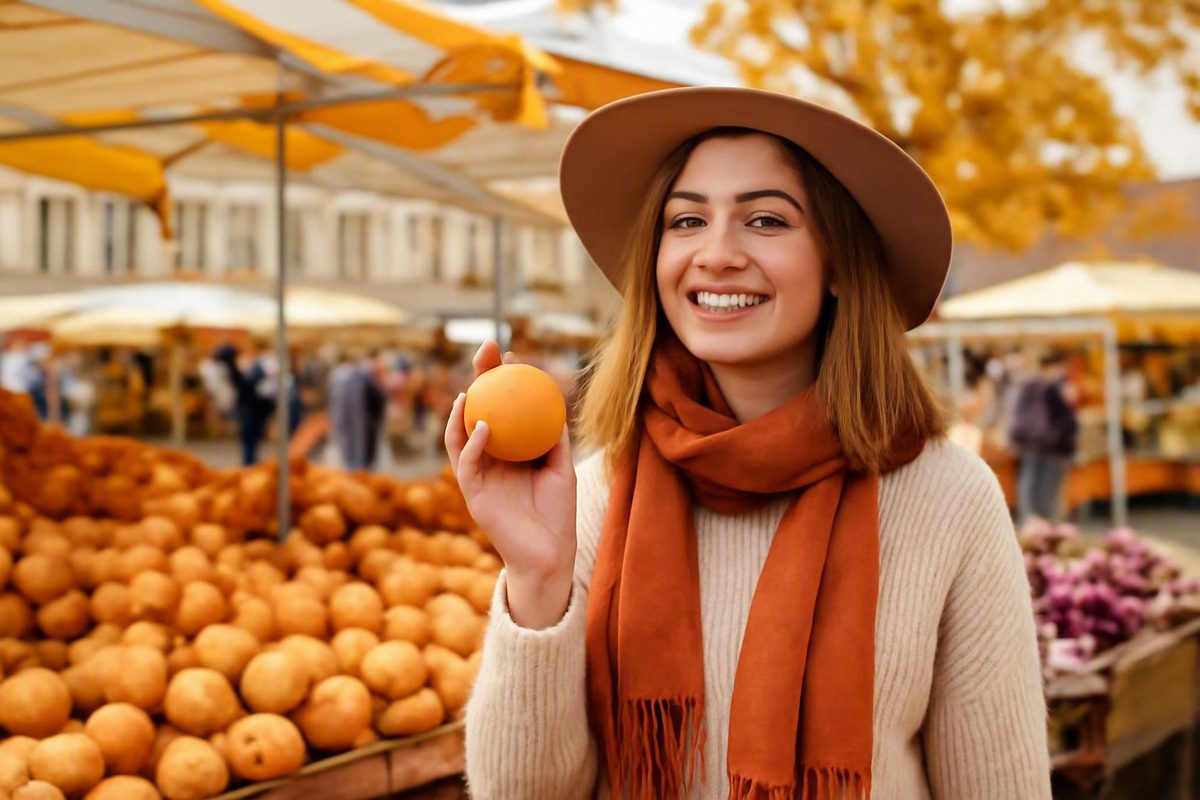
Weimar’s autumn celebration is known in English and German as the Weimar Onion Festival, Weimar Onion Market, Weimarer Zwiebelmarkt, or simply Zwiebelmarkt. All four names refer to the same event: a traditional onion and agricultural market that has developed into a broader festival across central Weimar.
Decorated onion braids remain its defining symbol. Visitors may also encounter regional food, beer, crafts, live music and street entertainment, with Weimar’s museums and landmarks close enough to complement a festival visit. It is therefore better understood as both a produce market and an old-town folk celebration—not as a compact food fair devoted exclusively to onion dishes.
This is an evergreen guide to the festival’s established character, not a current event notice. The available evidence is historical or third-party and does not confirm the next edition. Before booking, check the current official Weimar event information for dates, hours, admission arrangements, maps, accessibility provisions, programs and transport notices.
What the Weimar Onion Festival Actually Is
Zwiebelmarkt takes place in Weimar, in the German state of Thuringia. Third-party guides consistently describe it as an annual three-day event held in October, with market stalls and entertainment distributed through central streets and squares rather than contained within one enclosed venue. TasteAtlas describes Zwiebelmarkt as a three-day annual October festival in Weimar.
That distributed footprint matters. Some event listings provide one street address, but such addresses are best treated as reference points rather than the limits of the festival. The supplied accounts instead describe agricultural stalls, craft vendors, stages and performers occupying central Weimar and its principal squares.
The event has two overlapping identities.
First, it is an onion and agricultural market. Onions are sold in strings and braids, combined with garlic or herbs, and incorporated into decorative arrangements. Other produce, fruit, vegetables, spices and preserves have also appeared. The onion is more than a theme: it is the basis of the market’s most recognizable craft tradition.
Second, Zwiebelmarkt is a folk festival. Food stands, beer, handicrafts, music stages and street artists broaden the experience beyond produce shopping. A visitor might compare onion braids, eat festival food, listen to a band and visit a nearby museum during the same day.
These two identities explain why descriptions can sound inconsistent. An agricultural visitor may regard Zwiebelmarkt primarily as a produce market. Someone interested in music and beer may experience it as a street festival. A food traveler may find onion pie but also a much wider range of German or Thuringian fare. Each perspective captures only part of the event.
There is consequently no universal route through the festival. The best itinerary depends on where the current edition places produce stalls, crafts, stages and visitor services. Use the current festival map rather than assuming that one square or listed address contains everything.
Most importantly, past listings are not current operating instructions. Confirm the next edition’s dates, opening hours, admission rules, program, map and transport arrangements through current official Weimar or organizer information before traveling.
When It Usually Happens—and What Must Be Confirmed
Available third-party sources consistently place Zwiebelmarkt in October and describe it as lasting three days. Several call the second weekend of October its customary timing, but a reported tradition does not confirm the dates of a future edition.
Do not book a journey by simply counting forward to the second weekend of October. Event dates and operating arrangements can change, and the evidence supplied for this guide contains no verified schedule for the next festival.
The past 2025 edition demonstrates how historical details should be handled. One listing reported that it ran from Friday, October 10, through Sunday, October 12, 2025, with the following edition-specific market hours:
- Friday, October 10, 2025: noon to 6 p.m.
- Saturday, October 11, 2025: 6 a.m. to 6 p.m.
- Sunday, October 12, 2025: 8 a.m. to 6 p.m.
The listing also said entertainment continued after the market stalls closed. All of those dates and times apply only to the passed 2025 edition and must not be reused as a future timetable. IamExpat’s historical listing provides the 2025 dates and hours.
The distinction between market and entertainment hours is worth noting. In a future edition, the times for produce trading, food service and stage performances may not be identical. Check the schedule for the activity you specifically want to experience rather than relying on a general statement that the festival is “open.”
Before committing to a trip, verify:
- Exact dates: Confirm the year and all three festival dates.
- Daily market hours: Check when produce, onion and craft vendors are scheduled to trade.
- Evening program: Determine whether food or entertainment continues after market trading ends.
- Stage schedule: Note both performance times and locations.
- Admission and tickets: Check general entry rules and any exceptions for concerts, rides or activities.
- Festival map: Locate the principal squares, stages and confirmed visitor services.
- Accessibility: Look for step-free routes, accessible facilities and assistance information.
- Transit notices: Check long-distance rail, regional rail and local public-transport changes.
- Road restrictions: Confirm closures, parking rules and hotel or taxi access.
- Late updates: Recheck the official information shortly before departure.
Past listings reveal the festival’s general rhythm, but they cannot answer when the next Zwiebelmarkt will take place. Without a current first-party announcement, giving a 2026 or later date would create false precision.
The Signature Tradition: Braided and Decorated Onions
The decorated onion braid is Zwiebelmarkt’s most consistently documented signature product. Onions are plaited together and often embellished with dried flowers. Some arrangements incorporate garlic, herbs, greenery or other ornamental material.
These objects give the market much of its distinctive appearance. Vendors may hang braids and strings from stalls, arrange them vertically or combine them with larger displays. Repeated rows of onions create the basic form, while flowers, garlic and dried plants introduce contrasting colors and shapes. Designs naturally vary by maker.
Documented forms of onion craft include:
- Braided onion strings
- Onion garlands
- Onion-and-garlic strings
- Wreath-like onion decorations
- Floral or dried-plant sprays containing onions
- Dolls made partly from onions
- Small arrangements incorporating herbs or flowers
A visitor writing about the 2015 festival described stalls selling onion strings, onion-and-garlic combinations, decorative sprays and onion dolls. That account documents what one traveler saw in one edition; it does not guarantee the inventory of a future market. The firsthand 2015 account describes the onion merchandise encountered during that visit.
When comparing pieces, ask the maker whether an item is intended for cooking, display or a combination of the two. The supplied evidence establishes that both onions and decorative onion objects are sold, but it does not provide a universal rule for deciding how an individual braid should be used.
Details worth comparing include:
- Size: Is the braid compact or designed as a prominent display?
- Composition: Does it contain only onions or a mixture of onions, garlic and herbs?
- Decoration: Are dried flowers, greenery or other ornamental materials included?
- Construction: How is the piece assembled, and how is it intended to hang?
- Intended use: Does the maker describe it as produce, decoration or both?
- Carrying practicality: Can it be transported without crushing its decorative materials?
Avoid attaching unsupported symbolism to the craft. The available evidence does not establish claims about protective powers, disease prevention, famous owners or historical sales records strongly enough to present them as fact.
The most rewarding way to browse is simply to compare several makers. Look at how each balances produce and ornament, how flowers or garlic change the composition, and what the vendor says about the item’s intended use and care.
What to Eat, Drink, and Shop For
Onion pie and onion soup are among the foods associated with Zwiebelmarkt. Onion pie may appear under the German name Zwiebelkuchen, but recipes, toppings, accompaniments and serving styles can vary. The available sources do not establish that every edition—or every part of the market—offers a large selection of onion-centered dishes.
That distinction is important. The festival’s name may suggest that onion bread, fried onions, soup, pastries and experimental onion sweets will be found everywhere. In practice, the food offering depends on the participating vendors and where a visitor walks.
An archived Around Germany article associated the festival with onion cake, onion soup, agricultural stalls, Thuringian crafts, music and beer. It is useful as historical coverage, but it is old and internally inconsistent about the event’s origin, so it should not be used for current planning or definitive history.
General German and Thuringian festival fare may be as prominent as explicitly onion-based food. Depending on the edition and vendor mix, the choice can include substantial savory dishes, meat, bread, sweets and other familiar fair foods. Beer also appears repeatedly in festival descriptions, but no particular brewery, product, serving size or price should be expected in advance.
One traveler’s 2015 account reported plentiful food—especially pork—and beer, but fewer onion-focused food stands than anticipated. That observation does not disprove reports of onion pie or soup. It shows how an individual visitor’s impression can depend on the year, the vendors and the areas explored.
If eating a particular onion dish is a priority, consult any current vendor information before the visit. If the current official map confirms an information service, it may also be possible to ask there after arrival.
Shopping extends beyond prepared food. Documented categories include:
- Fresh onions and other agricultural produce
- Fruit and vegetables
- Spices and preserves
- Onion braids, garlands and decorative sprays
- Onion-and-garlic strings
- Onion dolls and souvenirs
- Pottery
- Woodcraft
- Other regional handicrafts
A lifestyle feature also provides a vegan onion-pie recipe made with ingredients including leek, smoked tofu and silken tofu. It should be understood as a modern vegan adaptation, not the definitive traditional recipe served at Zwiebelmarkt. The CulturallyOurs feature presents the recipe in that context.
Travelers with dietary requirements should ask vendors directly about ingredients, preparation and cross-contact. The evidence does not establish how common vegetarian, vegan, gluten-free or allergy-aware options are. Where a restriction is essential, identify suitable alternatives outside the festival before traveling.
Old reports are also unsuitable for setting a current food budget. Prices change, and spending depends on whether a visit involves one snack, several drinks, a full meal or craft purchases. Verify current payment guidance rather than assuming that most vendors accept either cash or cards.
Music, Performances, and the Onion Market Queen
Zwiebelmarkt is not only a sequence of shopping stalls. Multiple stages and street entertainment turn central Weimar into a circuit of produce, crafts, food and performances.
Across the supplied accounts, past programs have included folk groups, brass music, rock, DJs, dance and street artists. A commercial travel guide updated in 2026 describes that broad entertainment mix but provides no exact program or dates for a 2026 edition, so its categories should not be treated as a confirmed lineup. The guide’s entertainment overview includes folk, brass, rock, DJs and other performers.
The firsthand 2015 account mentions Irish-style music, pop and rap. Those examples demonstrate how far the program has ranged beyond traditional folk music, but they do not indicate which genres or performers will appear again.
The Onion Market Queen is another recurring feature in festival descriptions. The role is associated with representing Weimar and Zwiebelmarkt. One third-party event listing says people may apply, but the available evidence does not establish current eligibility rules, deadlines, selection procedures or duties. Anyone interested in participating should use current organizer information.
Third-party guides have also mentioned rides, games and children’s activities. These are examples of programming that has been reported, not promises for a future edition. Availability, location, age suitability and any participation charges require current confirmation.
Before visiting, check the official program for:
- Stage names and locations
- Artist schedules
- Opening and closing events
- Street-performance areas
- Children’s activities
- Rides or games
- Ticketed or reserved events
- Cancellations and weather-related changes
If a particular performance matters, note both its time and location. Movement between squares may take longer in a crowd than the map suggests. A flexible plan—one or two priority performances with browsing and food in between—is likely to work better than trying to see every stage.
From an October Produce Market to a Major Festival
Several third-party accounts trace Zwiebelmarkt to 1653, associating its beginning with an October market for agricultural goods or provisions. The supplied evidence includes no primary municipal decree or archival record, so 1653 should be treated as the commonly reported origin rather than a conclusively proven founding date.
One historical event guide provides the following broad development: a market beginning in 1653, growing into an important onion-purchasing destination during the nineteenth century, declining around the World Wars, attracting renewed interest in the 1950s and returning to a three-day format in the 1990s. These stages come from third-party festival history rather than primary archival evidence. IamExpat’s historical overview supplies this timeline.
The archived Around Germany article complicates the origin story by mentioning both 1635 and 1653. Because that page conflicts with itself and most of the other supplied sources use 1653, there is no adequate basis here for adopting 1635.
The cautious outline is therefore:
- Reported beginning in 1653: Described as an October agricultural or provisions market.
- Nineteenth-century growth: Reported to have become more important to onion buyers and traders in central Germany.
- Decline around the World Wars: Third-party histories say the market lost momentum.
- Mid-twentieth-century revival: Some accounts place renewed interest in the 1950s.
- Three-day format in the 1990s: Event histories report a return to or consolidation of the modern three-day structure.
This development helps explain the festival’s present character. Its commercial roots remain visible in onion and produce stalls. Decorative braids turn a practical crop into a distinctive craft. Food, beer and regional handicrafts broaden the market, while stages and street entertainment make it a visitor event as well as a place of trade.
Some travel guides call Zwiebelmarkt Thuringia’s oldest, largest or most popular folk festival. Those superlatives require comparative evidence not present here and should not be treated as established facts.
Attendance figures require similar restraint. Third-party estimates range from more than 300,000 visitors to approximately 350,000, but the supplied evidence does not independently verify or audit either figure. One historical listing describes attendance in the hundreds of thousands while clearly marking its 2025 event as passed. Travel Begins at 40 provides that historical crowd context.
The useful planning conclusion is not a precise attendance total, but that central streets and squares may be crowded. The market makes most sense when its agricultural and festival layers are considered together: music and general fair food do not erase the onion tradition, while the braids and produce stalls are only part of the modern experience.
Getting There, Handling Crowds, and Planning the Day
Transport planning should begin with notices for the actual festival weekend, not with parking or railway advice copied from a previous edition. Check long-distance and regional trains, local transport changes, road closures, parking restrictions and accommodation access shortly before departure.
Public transport is a reasonable option to investigate. One event listing recommends it, and the traveler who attended in 2015 observed many visitors arriving by train. Neither source establishes future frequencies, routes, capacity or service changes.
Driving may also be possible, but do not assume that a previously mentioned car park, access road or park-and-ride arrangement will operate again. Compare any accommodation advice with the current official traffic notices.
The 2015 traveler felt that crowds increased as the day progressed. That is one person’s observation, not proof that every future morning will be quiet. Arriving near the confirmed opening time may nevertheless be worth considering if the priorities are browsing, photography or speaking with vendors. Compare that approach with the current schedule so that an early arrival does not precede the activities you want.
Central Weimar is described as walkable, but a compact footprint does not guarantee quick movement during a festival. Crowds, queues, performances and temporary route changes can slow travel between squares. Visitors with reduced mobility, fatigue concerns or sensory sensitivities should allow additional time and examine any published accessibility guidance in advance.
A practical one-day sequence could be:
- Confirm the opening time. Recheck same-day event, transport and weather notices.
- Arrive in central Weimar. Orient yourself with the current festival map rather than one listed address.
- Browse onion products. Compare braids, strings, dolls and decorative arrangements.
- Stop for food. Look for onion pie or soup if offered, while remaining open to broader festival fare.
- Review the stage program. Choose performances by location as well as musical preference.
- Add one cultural stop. If desired, visit a museum or landmark whose opening and admission details have been confirmed.
- Return for crafts or entertainment. Check that the relevant stalls or performances are still scheduled.
- Leave flexibility for departure. Crowds and transport demand may affect the journey back.
Several practical services are not established by the available evidence. Verify the following through current event information:
- Toilet and accessible-toilet locations
- First-aid provision
- Lost-property procedures
- Sheltered or indoor areas
- Step-free routes and accessibility assistance
- Stroller suitability
- Lower-density or quieter routes, if any
- Cash and card guidance
- Confirmed visitor-information services
Use a current Weimar forecast when deciding what to wear. Comfortable footwear and a hands-free bag are practical for a festival spread across several streets and squares. If buying a fragile dried-flower arrangement, consider how it can be carried through crowded areas.
The 2015 traveler stayed in nearby Erfurt and reached Weimar by train. That shows one arrangement that worked for one visit, not a current recommendation about accommodation, prices or rail service. Erfurt can be compared with Weimar, but only after checking the relevant travel times and return options.
Combining Zwiebelmarkt With Weimar Sightseeing
Because festival activity occupies central streets and squares, it can be combined with a wider cultural visit. That does not mean every museum will be open, easy to reach or unaffected by festival crowds. Check each attraction separately for its current name, location, hours, admission rules and ticket availability.
A firsthand traveler combined the 2015 festival with visits to the Bauhaus Museum and Goethe National Museum. The account demonstrates that market browsing and cultural sightseeing can coexist in one trip, although the museum locations, routes and ticketing arrangements encountered then should not be assumed today. The 2015 travel account describes both museum visits alongside the festival.
A flexible one-day framework might be:
- Morning: Browse agricultural stalls and signature onion braids.
- Late morning or early afternoon: Visit one confirmed museum, exhibition or landmark.
- Afternoon: Return for food, pottery, woodcraft and other regional goods.
- Evening: Attend a performance if its time, location and admission conditions are confirmed.
This structure creates variety and may offer a break from the busiest outdoor areas. Avoid overloading the day, however. A substantial museum visit, several market areas and multiple performances can require more walking and waiting than expected.
For a full weekend, divide the experience by theme:
- Set aside one period for serious browsing and onion-craft purchases.
- Reserve another for food and regional handicrafts.
- Choose selected performances instead of trying to cover every stage.
- Give museums and historic sites separate blocks of time.
- Keep one period flexible for delays, weather or anything missed earlier.
Do not assume that festival entry includes museum admission. Likewise, the fact that a past edition had free general admission does not establish that every concert, ride, activity or future edition will be free.
Before leaving home, complete one final check covering:
- Confirmed festival dates
- Daily market and entertainment hours
- Current festival map
- Stage and activity program
- Rail and local transport changes
- Road closures and parking restrictions
- Accessibility information
- Admission rules and ticket exceptions
- Weather-related updates
Zwiebelmarkt’s appeal lies in the combination of a distinctive onion tradition and a broader central-Weimar festival. Decorated braids give it a memorable visual identity, while variable food offerings, crafts, beer and performances expand the experience. Its history is commonly traced to 1653, though the evidence available here does not prove that date through primary records.
Treat historical schedules and personal accounts as context rather than promises. Confirm the next edition’s dates, hours, program, map, admission rules, accessibility arrangements and transport notices through current official Weimar or organizer information before traveling.
When is the next Weimar Onion Festival?
The next edition cannot be confirmed from the historical and third-party evidence available for this guide. Sources consistently describe Zwiebelmarkt as an annual three-day October event, and several identify the second weekend of October as its traditional timing, but that pattern is not sufficient for booking.
For historical context only, the passed 2025 edition was listed for October 10–12, 2025. Travel Begins at 40 records those dates and marks the event as passed. Check current official Weimar or organizer information for the next confirmed dates.
Is the Weimar Onion Festival free to enter?
Third-party listings described general admission to the 2025 edition as free, but that was an edition-specific policy and does not establish the arrangements for a future festival.
Even where general market entry is free, concerts, rides, activities or nearby museums may have separate charges or ticket requirements. Confirm general admission and all exceptions in the current program.
What food can visitors expect at Zwiebelmarkt?
Onion pie and onion soup are among the foods associated with the festival. General German or Thuringian festival fare, meat dishes, bread, sweets and beer may also appear.
The exact mix varies by vendor and edition, and visitors should not assume that every market area has abundant onion-focused food. Anyone with dietary or allergy requirements should ask vendors directly about ingredients, preparation and cross-contact.
What are the decorated onion braids sold in Weimar?
They are strings of onions plaited together and often embellished with dried flowers. Some incorporate garlic, herbs, greenery or other decorative material. Related objects include garlands, wreath-like arrangements, floral sprays and dolls made partly from onions.
The intended use can vary. Ask the maker whether a particular piece is sold as usable produce, decoration or a combination of the two, and how it should be handled.
Can visitors combine the festival with Weimar’s museums?
Yes, in principle. Festival activity in central Weimar can be paired with a museum or landmark visit, and one traveler combined the 2015 Zwiebelmarkt with the Bauhaus Museum and Goethe National Museum.
Check every attraction independently before travel. Museum locations, opening hours, tickets and entry procedures can change, and festival admission should not be assumed to include museum entry.