
Which ID to Carry Into Germany While Land-Border Checks Run to March 2027
Which ID to carry into Germany by train, coach or car while land-border checks run to 15 March 2027, where officers check, and the one delay figure DB gives.
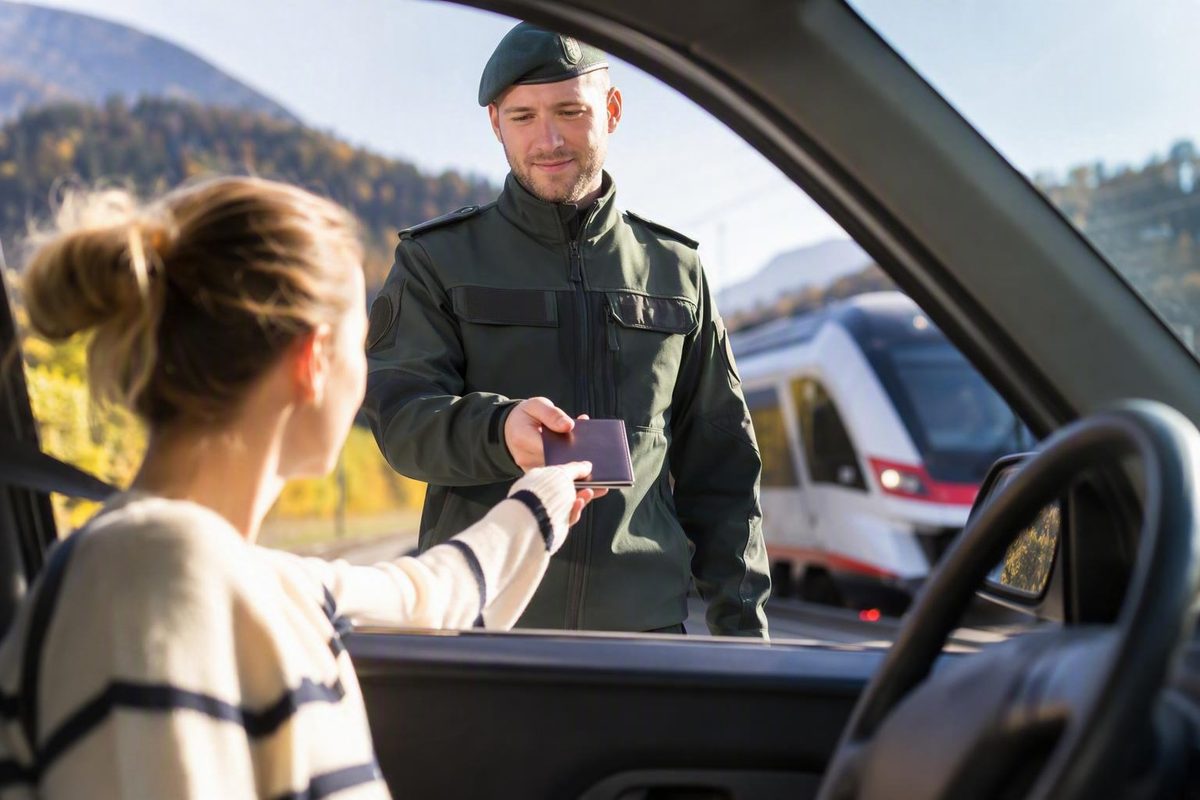
Germany’s temporary checks at all nine land borders are listed through 15 March 2027, not for the whole of 2027. A tourist entering overland before then should keep within reach the travel document their citizenship and status already requires: a qualifying national identity card for travelers entitled to use one, a passport for everyone else, plus any visa or residence permit that applies. The controls create no new rule that every visitor must carry a passport.
A check can happen on board a train, during a scheduled station stop, at a road crossing, or up to 30 kilometres inside Germany. The only published delay figure is Deutsche Bahn’s: roughly 5–15 minutes for station checks at Kehl and Frankfurt (Oder). No source gives a figure for coaches, cars or other rail routes. The current dates sit in the European Commission’s table of temporary internal border controls, which is the page to recheck shortly before departure.
Pick your entry country, transport and document; the plan updates beside the controls.
Germany Border-Check Planner
Land-border controls listed 16 September 2026 to 15 March 2027.
Leave blank if you have no timed connection.
From France into Germany by long-distance train
- Carry within reach
- Your valid national ID card, if official guidance confirms it qualifies for your citizenship. Carry the card itself. DB asks passengers heading to Germany to have it ready.
- Where a check can happen
- On board or during a scheduled station stop. DB cites station checks at Kehl.
- Published extra time
- ~5–15 minDB's approximate figure for station checks at Kehl. It applies only if your train is checked there.
| Mode | Where a check can happen | Published delay |
|---|---|---|
| Train | On board or at a scheduled station stop | ~5–15 min at Kehl (France) and Frankfurt (Oder) (Poland); elsewhere — |
| Coach | At or after the crossing, up to 30 km inside Germany | — (operators advised to allow extra time) |
| Car | At the crossing or on roads up to 30 km inside Germany | — |
Sources: European Commission table of temporary internal border controls; Deutsche Bahn border-control guidance (undated); German Federal Police border-area guidance. — means no figure is published, not zero delay.
A dash in the planner means no source publishes a delay figure for that combination. It is not a prediction that the crossing will be quick.
Controls Are Listed From 16 September 2026 Through 15 March 2027
The Commission’s table lists German internal land-border controls from 16 September 2026 through 15 March 2027, covering the land borders with all nine neighboring countries. Tourists may therefore meet document checks during early 2027. Nothing in the notification establishes that controls continue after 15 March or run through the rest of the year.
| Confirmed | Not Established |
|---|---|
| Controls listed 16 September 2026 to 15 March 2027 | Whether they continue after 15 March 2027 |
| All nine land borders are covered | How often a given crossing or route is checked |
| Travelers may be asked for documents they must carry | Whether a specific train, coach or car is stopped |
| Checks can affect cross-border journeys | A delay estimate that holds for every route |
An earlier report described the continuation as a request by Germany’s interior minister. That August 2026 Migazin report records the request stage, not the listed status; the newer Commission table is the source for the current dates.
Schengen normally operates without checks at internal borders. The Schengen Borders Code nevertheless permits temporary internal controls as a last-resort measure. The practical consequence for a visitor is that a journey from another Schengen country into Germany can involve an identity or travel-document check even though it is an internal crossing.
For a trip that begins on 16 March 2027 or later, assume neither that the controls have expired nor that they have been extended. The present notification cannot answer that, and the Commission table is where a change would appear.
All Nine Land Borders Are Covered, and Checks Can Happen 30 Kilometres Inland
The notification covers Germany’s borders with Austria, Switzerland, France, Luxembourg, Belgium, the Netherlands, Denmark, Poland and Czechia. The same nine borders and the 15 March 2027 end date appear in a 16 September 2026 transport-industry report.
It concerns land borders. It does not by itself establish equivalent temporary-control procedures at German airports or seaports, so anyone flying or arriving by sea should use the entry and carrier guidance for that journey rather than applying the land-border notice to it.
A check does not have to take place on the border line. According to the German Federal Police’s border-area guidance, officers may carry out checks at the border or within an area extending as far as 30 kilometres inside Germany. A uniformed officer from the neighboring country may also be present.
A driver entering from the Netherlands could be checked at the crossing or later on a road inside that zone. That does not mean every road, car or traveler is inspected; the guidance gives no inspection frequency for individual routes or for tourists.
Rail and coach passengers are in the same position. Crossing the physical border without stopping does not rule out a check further on.
The Checks Add No New Passport Rule: Carry the Document You Already Need
Carry, and keep accessible, the valid travel document required for your citizenship, residence status and trip. Some eligible travelers may use a qualifying national identity card. Other tourists need a passport. Germany’s temporary measure does not create a universal rule that every tourist must carry a passport regardless of nationality or status. What it changes is the chance of being asked, which makes it costly to have the right document out of reach.
The decision runs in this order:
- If official guidance for your citizenship and circumstances permits travel with a qualifying national identity card, carry that card and keep it ready.
- If a national identity card is not accepted for your journey, travel with the required passport.
- If your status requires a visa, residence permit or other supporting document, verify the precise requirement and carry the documents that apply to you.
- If you are uncertain, ask the appropriate German embassy or consulate, an official EU authority or your own government before departure.
Transport guidance refers generally to passengers identifying themselves with a passport or national identity card. It does not settle which option is legally sufficient for every citizenship, age or immigration status, so another traveler’s experience at the same crossing proves nothing about your own documents.
A Driving Licence Is Not Established as a Travel Document
The Federal Police guidance mentions a driving licence as one of the documents officers may request. It does not establish that a driving licence satisfies the travel-document requirement for an international border crossing. Drivers should keep their driving documents available and, separately, carry the passport, qualifying identity card or status documents the journey requires.
Validity, Children and Pending Residence Cases Need Their Own Check
Check validity as well as document type. Requirements can differ between residents and short-stay visitors.
Children’s requirements need verifying separately from those of the adults they travel with. Travelers with pending residence applications or provisional documentation need advice for their exact circumstances. The border-control notice settles none of those cases.
Accessible means within easy reach: not in a checked suitcase, not locked in a coach’s luggage hold, not packed under other bags in a car boot.
Deutsche Bahn Gives the Only Delay Figure: 5–15 Minutes at Two Stations
| Mode | Where a Check Can Happen | Published Delay |
|---|---|---|
| International train | On board or at a scheduled station stop | ~5–15 min, Kehl and Frankfurt (Oder) only |
| Cross-border coach | At or after the crossing, inside the border area | None; operators told to allow extra time |
| Car | At the crossing or within 30 km inside Germany | None |
Deutsche Bahn’s border-control guidance lists incoming ICE, EC, ECE, IC, RJ, TGV and NJ services as subject to controls. DB says inspections may take place on board or during scheduled station stops, and it advises passengers traveling toward Germany to have a passport or accepted identity card ready.
DB also says station-based checks at Frankfurt (Oder) and Kehl can add approximately 5–15 minutes. Kehl is the German station on the Rhine opposite Strasbourg, and Frankfurt (Oder) faces Poland across the Oder, so the figure relates to rail entries from France and Poland that are checked at those stops.
That estimate is limited to those two stations and should not be applied to other stations, trains or routes. The DB page is undated, so check your operator’s current notices and connection information shortly before traveling.
This matters most for transfers. An itinerary that depends on an international train arriving exactly on time is fragile, particularly when the onward ticket is separate or inflexible. On a connection of 20 minutes, a check at the top of DB’s range leaves 5.
Coach Passengers Should Keep Documents in the Cabin
Transport-industry guidance advises coach operators to plan additional time for cross-border journeys during the control period. It does not quantify a typical delay, so passengers can assume neither a particular hold-up nor an unaffected trip.
A coach can be checked at or after the crossing, including inside the border area. Documents stored in luggage under the coach are out of reach at exactly that moment; keep them in the passenger cabin.
Drivers Need Travel Documents for Every Occupant
A car may be checked at the crossing or farther inside Germany, anywhere within the 30-kilometre zone. Keep every occupant’s required travel documents reachable, along with the driver’s licence and vehicle documents.
The current evidence gives no reliable way to predict whether a particular vehicle or crossing will be checked, and no source publishes a waiting-time figure for road crossings.
Border Checks, EES and ETIAS Are Three Separate Processes
Germany’s temporary land-border controls, the Entry/Exit System and ETIAS all concern European travel, but they do different jobs:
- Germany’s temporary controls concern internal Schengen land borders, such as a journey from France, Poland or the Netherlands into Germany.
- EES, the Entry/Exit System, is intended to register eligible non-EU nationals making short stays when they cross the Schengen Area’s external borders.
- ETIAS is a future travel authorization for eligible visa-exempt travelers, not the same process as Germany’s temporary internal-border checks.
One journey can therefore involve different requirements at different stages. Entering the Schengen Area from outside it concerns external-border procedures; traveling overland afterwards from another Schengen country into Germany concerns Germany’s temporary internal controls.
The official EU ETIAS status page currently says that ETIAS is not operating, applications are not being accepted and a specific launch date has not been announced. The EU says it will announce the date several months before launch. Older forecasts that assign ETIAS a particular 2027 start date are not confirmation.
If ETIAS begins before your journey, check separately whether it applies to your citizenship and trip. An ETIAS authorization and the travel document required to cross a border are distinct parts of the process, and the German land-border notice does not determine ETIAS eligibility.
What to Confirm for Each Traveler Before an Overland Crossing
| Confirm | Where |
|---|---|
| Listed dates and covered borders are unchanged | Commission table |
| ID card or passport for each person, children included | German embassy or consulate, EU authority, own government |
| Passport validity, visa and residence-document conditions | Same official sources |
| Rail or coach notices for your departure | DB or your operator |
| Trips from 16 March 2027 | Commission table, close to departure |
Rail and coach passengers should read current operator notices even when the original timetable still shows a normal connection, because DB’s border-control page carries no date.
For an overland trip into Germany on or before 15 March 2027, the proportionate preparation is narrow: the right document for each person, kept within reach, and an onward connection that survives a check of up to DB’s 15 minutes where that figure applies. The available evidence does not show that every tourist, train, coach or car will be inspected.