
When Frankfurt Opened Its Skyline to the Public
No current or forthcoming edition is confirmed by the available evidence. The May 25-26 dates belong to the historical 2013 event, not a current announcement.
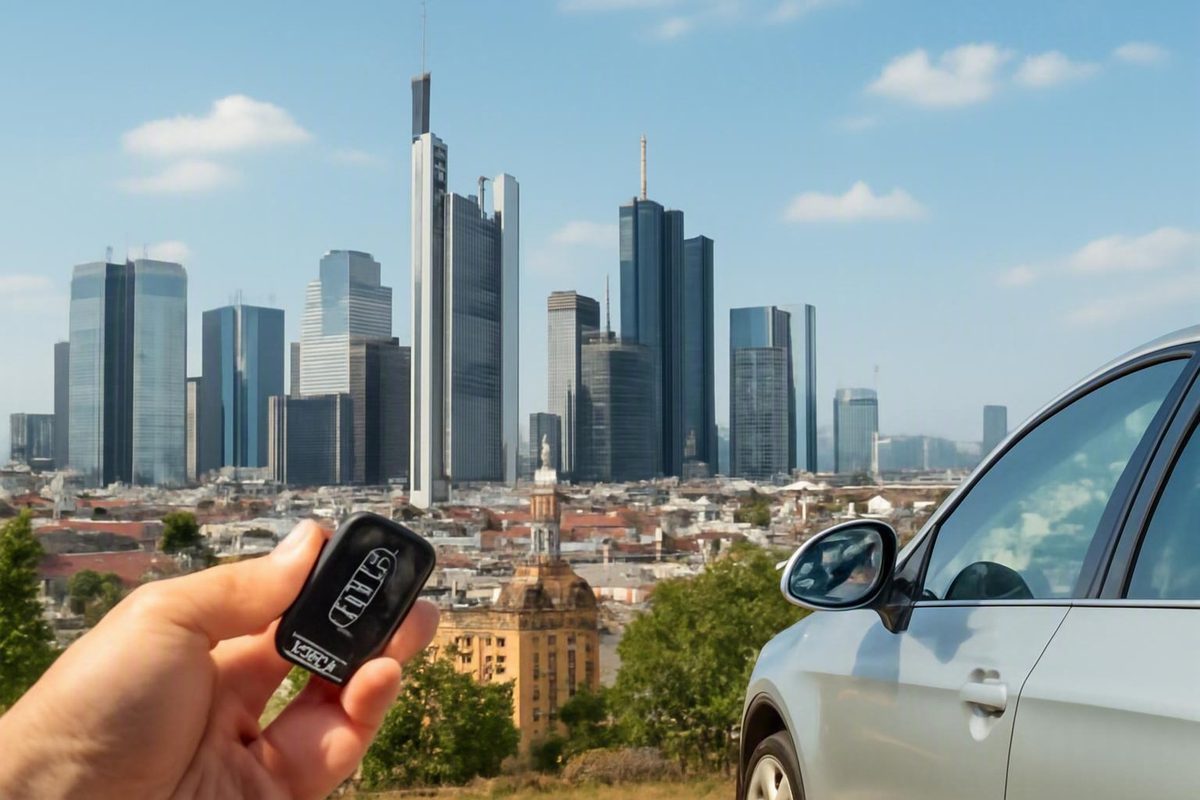
Frankfurt’s skyline usually presents itself at a distance: a cluster of high-rises associated with banking, business, and restricted workplaces. The Wolkenkratzer-Festival briefly changed that relationship by opening selected building spaces to reserved visitors while concerts, exhibitions, performers, and other attractions filled a route through the central high-rise district.
For anyone searching for the next Frankfurt Skyscraper Festival, the essential fact comes first: the available evidence does not confirm a current or forthcoming edition. It documents the major festival associated with May 25–26, 2013, but those historical dates are not a present-day event announcement.
This is therefore a historical guide to the festival’s concept, access system, buildings, and announced 2013 program. Archived dates, ticket procedures, building lists, and transport arrangements should not be used to plan a current trip.
Current status: Is another Frankfurt Skyscraper Festival scheduled?
No future Frankfurt Skyscraper Festival date is confirmed by the supplied sources. May 25–26 refers to the historical 2013 edition, which contemporary travel coverage described as returning after a six-year interval.
A Skyline Atlas archive calls 2013 the most recent edition known to that publication. That establishes what the source reports, not the festival’s complete chronology through 2026. An undated or subsequently updated third-party archive cannot prove that no later event occurred or that no announcement has appeared elsewhere. The defensible conclusion is narrower: the evidence available here confirms no future date, while the Skyline Atlas festival archive identifies 2013 as the latest edition in its account.
There is one later status report. Skyline Atlas says that Hit Radio FFH responded to an inquiry by stating that no new edition was being planned as of autumn 2018. The timing matters: this was a status indication for autumn 2018, not a permanent cancellation notice or a guarantee that plans could never change. Skyline Atlas reports both the historical event details and the time-limited 2018 response.
Prospective visitors should therefore be cautious with pages that display the old May dates prominently. References to free admission, online allocation, timed tower tickets, 18 participating buildings, or a route through the banking district describe the historical festival. They do not establish a current booking process.
Before reserving transport or accommodation, a traveler would need a dated announcement identifying the event year, organizer, participating buildings, and authorized reservation channel. Ideally, that information would come from a current organizer, the City of Frankfurt, a tourism authority, or the participating properties themselves. The present source record cannot supply that confirmation.
What the Wolkenkratzer-Festival was designed to celebrate
The German name Wolkenkratzer-Festival means “Skyscraper Festival.” Its focus was Frankfurt’s skyline and high-rise architecture, but its defining feature was not simply the gathering of crowds beneath tall buildings. The event offered controlled public access to selected spaces that were not normally available to general visitors.
That made it different from an ordinary street fair. At ground level, the announced program included concerts, theater, exhibitions, street artists, athletes, food, and other entertainment. Above the streets, ticket holders could enter particular participating buildings at assigned times, with advertised possibilities across the wider festival including viewpoints, tours, terraces, restaurants, lounges, exhibitions, and light installations.
The central idea was a temporary reversal of normal access. During the festival, selected areas became cultural destinations. Visitors with the appropriate reservations could experience the skyline from inside participating buildings rather than merely viewing it from the pavement.
Skyline Atlas reports that the festival began in 1996 and subsequently returned several times at irregular intervals. The publication attributes the original idea to Hans-Dieter Hillmoth, says Hit Radio FFH centrally coordinated the event, and reports support from about 100 sponsors and partners. These are third-party historical claims rather than details verified here through original organizer records.
The irregular schedule is fundamental to understanding the event. It was not presented as an annual festival that travelers could expect in the same month every year. Whatever caused the gaps between particular editions, the format itself meant that any return would require a substantial new announcement.
The program also celebrated more than building height. Tours and viewpoints allowed visitors to consider Frankfurt’s architecture from above, while aerial performers and high-wire acts used vertical space as part of the spectacle. Street stages and installations connected otherwise separate buildings into one public event.
The result was a temporary opening of Frankfurt’s corporate skyline: broadly accessible along the central route, but selective and capacity-controlled inside the towers.
Free festival access versus timed tower tickets
The historical admission model had two separate layers:
- General attendance at the outdoor festival was reported as free.
- Entry into a participating tower required a separate free ticket for a specified building and time.
Free attendance did not permit unrestricted entry to every high-rise. Tower capacity was limited, so reservations were tied to individual buildings and time slots.
Skyline Atlas reports that approximately 80,000 free tower tickets were fully allocated within three hours in 2013. The source uses wording that can be translated as tickets being “sold,” but “allocated” is more precise because the same account says they were issued free of charge. It also reports that tower tickets had been distributed online from 2007 onward, although that historical method cannot be assumed for any future edition.
This produced two distinct visitor experiences. Someone without a tower ticket could still attend the public program, encounter performances and installations, buy refreshments, and experience the high-rise district as an outdoor cultural venue. General attendance was therefore not dependent on securing a building reservation.
A ticket holder received access to something scarcer: a designated building during a defined period. The exact experience depended on that building’s announced program and accessible areas. A reservation might provide entry to a viewpoint, tour, terrace, lounge, restaurant, exhibition, or another selected space, but a ticket for one participant did not confer access to every building.
Timed entry was more than an administrative inconvenience.
In practical terms, the model meant:
- Without a tower ticket: visitors could still attend the outdoor festival and enjoy its public entertainment.
- With a timed ticket: visitors needed to organize their day around a specified building, entrance, and reservation window.
- With only general admission: visitors could not assume that they would be allowed into a tower.
These details explain the 2013 model; they are not instructions for obtaining future tickets. If the festival returned, organizers could adopt a different platform, charge for particular activities, change capacity limits, impose named-ticket rules, or redesign the entire reservation system.
A five-kilometer route through Frankfurt’s architecture
Pre-event coverage described the 2013 festival as an approximately five-kilometer route through central Frankfurt’s high-rise district. Instead of concentrating all activity in one square, the event connected participating properties and outdoor performance areas across the city center.
Third-party sources reported or announced 18 participating buildings. The available lists are incomplete, however, and the two surviving travel previews appear substantially overlapping in their structure and details. Their repetition should not be treated as fully independent verification of the route, final roster, or program.
The archived 2013 Around Germany preview announced an approximately five-kilometer route, 18 participating buildings, a 260-meter Commerzbank Tower, and a Main Tower platform at about 200 meters. Because it was written before the event, it establishes what was announced rather than what was ultimately delivered.
| Building | Detail supported by the sources | Reported visitor experience | Evidence limitation |
|---|---|---|---|
| Commerzbank Tower | The historical travel previews described it as 260 meters tall and listed it as a participant. | The sources establish announced public opening as part of the festival, but do not identify the exact visitor route or accessible floor. | Participation in 2013 does not establish ordinary or present-day public access. |
| Main Tower | The previews described its viewing platform as approximately 200 meters high. | The platform was presented as an elevated place from which visitors could see Frankfurt. | The evidence does not show that every ticket holder received access to every advertised Main Tower facility. |
| Messeturm | Named in the pre-event travel coverage. | Listed as one of the towers involved in the route. | No specific rooms, floors, or visitor itinerary are documented. |
| Westend Tower | Named in contemporary travel coverage; one preview described it as the DZ Bank administrative center. | Announced as a participating high-rise. | The supplied evidence does not specify which areas were intended to open. |
| Tower 185 | Listed by Skyline Atlas among the 2013 participants. | Participation indicates inclusion in the controlled tower program. | No building-specific visitor experience is documented in the supplied record. |
| OpernTurm | Listed by Skyline Atlas as a participant. | Included in the reported high-rise circuit. | The accessible space and visitor route are not identified. |
| Eurotheum | Named in the travel previews; its 22nd Lounge was mentioned as a festival hospitality venue. | The lounge was advertised as a place for refreshments and an elevated setting. | The material is pre-event coverage and does not independently confirm final access arrangements. |
| Main Forum | Listed among the 2013 participants by Skyline Atlas. | Included in the tower-access program. | No more detailed building itinerary is supplied. |
| Jumeirah Frankfurt | Listed by Skyline Atlas among the participating properties. | Its inclusion extended the route beyond conventional office towers. | The evidence does not identify which hotel spaces were accessible. |
| Eschenheimer Turm | Described as an approximately 50-meter Gothic tower built in the 15th century and as a first-time participant. | Offered an announced historical contrast to the modern high-rises. | It is not a modern skyscraper and does not fit the separate 200-to-260-meter description. |
| “Dresdner Bank skyscraper” | This wording appears in the historical travel previews. | Presented as another building on the announced route. | The evidence does not establish which current building name, if any, corresponds to the reference. |
The historical “Dresdner Bank skyscraper” label demonstrates the danger of treating old participant lists as current guides. Corporate names, occupiers, ownership, and branding can change. Assigning the phrase to a present-day building without supporting evidence would be speculation.
“Participating” also did not necessarily mean that an entire property was open. A building could offer a defined entrance route, selected viewing level, scheduled tour, lounge, or exhibition while all other areas remained restricted. Festival access must therefore be distinguished both from ordinary public access and from unrestricted exploration.
Seen as a route rather than a checklist, the festival connected landmarks that are normally experienced in isolation. Outdoor attractions filled some of the spaces between buildings, making movement through the high-rise district part of the event.
From panoramic tours to performances in the air
The announced 2013 program falls into four broad categories: tower experiences, street culture, aerial or extreme-sport attractions, and food or hospitality. Together, these elements were intended to serve both reserved tower visitors and the much larger public audience outside.
Tower experiences
The tower program defined the festival. Pre-event coverage advertised panoramic viewpoints, guided skyline tours, terraces, lounges, restaurants, exhibitions, and light installations. These were festival-wide possibilities, not experiences documented for every participating building or every ticket holder.
Main Tower’s approximately 200-meter platform was promoted as a viewpoint, while the 22nd Lounge in Eurotheum and a Main Tower bar appeared as examples of hospitality incorporated into the vertical program. Other buildings were simply listed as participants without a detailed account of the floors or facilities intended for public access.
Guided tours could turn a visit into more than an elevator ride. From an elevated position, visitors could examine the skyline and central district; inside, selected routes could draw attention to the relationship between privately managed buildings and public urban space. The evidence does not, however, preserve a complete tour schedule or establish what every tour covered.
Exhibitions and light installations expanded the idea beyond panoramic sightseeing. Towers could serve as illuminated landmarks, display spaces, or settings for programmed activity, helping distinguish one stop from another.
Street culture
At ground level, the planned program included concerts, theater, art exhibitions, street artists, skaters, climbers, and acrobats. Stages and installations were intended to turn the route between buildings into an open-air cultural setting.
This public program was essential because tower capacity was much lower than overall attendance. People who did not secure reservations could still spend time in the district and experience the festival through music, performance, art, and the surrounding architecture.
Several advertised performers responded directly to the built environment. Climbers and acrobats emphasized façades and height, while skaters animated paved public spaces. Music, theater, and exhibitions supplied more conventional cultural attractions along the route.
Aerial and extreme-sport attractions
Historical accounts reported or announced hot-air balloon rides, base jumping, parachuting, bungee jumping, high-wire acts, and aerial acrobatics. These attractions treated the air around the towers as another performance space.
The connection to the festival theme was direct. Flight, suspension, climbing, and controlled descent turned vertical architecture into spectacle. A high-wire act or parachute display could also be seen by street-level audiences who had no tower reservation.
Balloon rides were promoted as a moving aerial viewpoint, while jumping and high-wire attractions used the towers or surrounding skyline as dramatic settings. These descriptions show the ambition of the announced program but do not prove that every activity occurred exactly as planned.
Food and hospitality
Restaurants, bars, panoramic lounges, terraces, and refreshment stands supported both parts of the event. Selected hospitality spaces inside participating buildings were advertised as destinations, while outdoor stands served the broader public.
Skyline Atlas also reports fireworks and “permanent attractions” among the wider entertainment. The source does not define those permanent attractions more precisely, so they should not be reclassified as a particular kind of fairground or installation.
A 2013 Traveleurope preview announced concerts, theater, art, light installations, guided tours, balloon rides, skaters, climbers, acrobats, terraces, restaurants, and panoramic lounges. It was published before the festival, making “announced,” “planned,” and “promoted” more accurate than asserting that every item definitely took place.
The supplied evidence does not independently document final schedules, weather changes, cancellations, or the delivery of every advertised attraction. It supports a description of the intended program, not a complete post-event record.
The historic tower that complicated the skyscraper label
Eschenheimer Turm was announced as a first-time participant in 2013. The travel previews described it as an approximately 50-meter Gothic tower built in the 15th century, setting it apart from modern participants such as Commerzbank Tower, Main Tower, and Messeturm. The archived preview places the historic tower on the announced route alongside Frankfurt’s modern high-rises.
Its inclusion broadened the festival’s architectural story. Frankfurt’s vertical identity was not presented solely through corporate buildings or rankings by height. The route could also contrast a medieval tower with much later high-rise construction associated with contemporary business.
That contrast made Eschenheimer Turm relevant precisely because it did not meet an ordinary definition of a modern skyscraper.
The pre-event coverage contains an important inconsistency. It describes the open skyscrapers as ranging from 200 to 260 meters while also including the approximately 50-meter Eschenheimer Turm. The most reasonable interpretation is that the 200-to-260-meter range referred to selected modern skyscrapers and that Eschenheimer Turm was a special historical addition.
It would therefore be inaccurate to force the Gothic tower into that height range or describe it as a modern skyscraper. Its role was to place different eras of Frankfurt’s vertical architecture within the same public itinerary.
How large was the 2013 festival—and how reliable are the numbers?
Several reported figures indicate the scale attributed to the 2013 Wolkenkratzer-Festival:
- Skyline Atlas estimates approximately 1.2 million visitors.
- Third-party sources report 18 participating buildings.
- Skyline Atlas says approximately 80,000 free tower tickets were allocated within three hours.
- The same publication reports support from about 100 sponsors and partners.
- Pre-event travel coverage described an approximately five-kilometer route through central Frankfurt.
These figures measure different things. The attendance estimate concerns the festival as a whole, whereas the tower-ticket figure covers only reserved building entry. The building count describes the reported extent of the tower program, and the sponsor count indicates the breadth of institutional support claimed by Skyline Atlas.
The attendance estimate must also be kept separate from the pre-event forecast. Travel coverage published before the festival said that more than one million people were expected. Skyline Atlas later reported approximately 1.2 million visitors. One figure is a forecast and the other a retrospective estimate; neither is supported here by official attendance documentation explaining the counting method. The Skyline Atlas archive reports the approximately 1.2 million figure for 2013.
It would be equally misleading to equate 1.2 million festival visitors with 80,000 tower entries. On the reported numbers, reserved access was available only to a much smaller portion of the total crowd. Most attendees could participate in the public street program without entering a building.
That difference was built into the festival’s structure. Concerts, performances, installations, refreshment stands, and aerial spectacles could serve large outdoor audiences.
None of the principal figures is independently verified here through organizer accounts, municipal records, or audited documentation. The archived travel previews also appear substantially overlapping, so their matching claims do not necessarily constitute independent corroboration.
Even with those limitations, the figures describe a coherent operating model: mass public participation at street level combined with scarce, reserved access above it.
What to know if the festival is announced again
If a future Frankfurt Skyscraper Festival is officially announced, it should be treated as a new event rather than a continuation of 2013 procedures. The historical format suggests which questions to ask, but it cannot answer them in advance.
First, verify the date and organizer. A credible current announcement should include the event year, publication date, organizer, and identifiable contact information. An article that merely repeats May 25–26 without a new year is likely describing the historical 2013 edition.
Second, confirm the participating buildings. Ownership, occupants, branding, and access policies can change. A tower that participated historically may not return, and its accessible floors or visitor route could be different even if it does.
Third, examine the reservation system. Questions should include:
- Is general festival attendance free?
- Does each tower require a separate reservation?
- Are tickets tied to a named visitor, building, and time?
- Which booking platform is authorized?
- How many reservations may one person request?
- Are any activities paid?
- What identification is required?
- Can reservations be transferred or canceled?
- What happens after a missed entry time?
The reported allocation of approximately 80,000 tower tickets within three hours in 2013 suggests that reservations could be scarce if a similar system returned, according to Skyline Atlas. It does not prove that future tickets would be free, released online, tied to individual buildings, or offered in the same quantity.
Fourth, seek current accessibility information. Different buildings may have different step-free routes, elevator arrangements, waiting areas, age limits, and assistance procedures. Historical travel previews do not provide reliable guidance for present-day access needs.
Fifth, review security conditions. Working towers and hotels may regulate bags, photography, equipment, food, liquids, and late arrival. Rules for an outdoor performance area may differ from those at a controlled building entrance.
Sixth, check weather policies. Balloon operations, high-wire acts, terraces, fireworks, and other outdoor or aerial activities can be affected by conditions. Any future event would need current procedures for delays, cancellations, and substitutions.
Seventh, verify transport changes and road closures. A central route could affect driving, public transport stops, taxis, cycling, and pedestrian movement. Only notices issued for the relevant event year could establish the applicable arrangements.
Official information should clearly identify the new edition, organizers, partners, buildings, booking channel, and entry terms. Historical articles mentioning 18 buildings, 80,000 tickets, or May 25–26 without a current year should not be treated as booking pages.
Frequently asked questions
When was the Frankfurt Skyscraper Festival held?
The major edition covered here was announced for May 25–26, 2013, after a six-year interval, according to the contemporary Traveleurope preview. Skyline Atlas says the festival began in 1996 and returned at irregular intervals.
The supplied evidence does not establish a complete chronology through 2026, so 2013 should not be described definitively as the final edition ever held.
Is the Frankfurt Skyscraper Festival free?
Skyline Atlas reports that general attendance in 2013 was free. Tower tickets were also free, but each was limited to a particular building and time.
Free general admission therefore did not include unrestricted high-rise access. Visitors without reservations could attend the public program, while tower entry remained capacity-controlled.
Which skyscrapers participated in the 2013 festival?
Third-party sources reported 18 participating buildings. Named examples included Commerzbank Tower, Main Tower, Messeturm, Westend Tower, Tower 185, OpernTurm, Eurotheum, Main Forum, and Jumeirah Frankfurt.
The approximately 50-meter, 15th-century Eschenheimer Turm was also announced as a first-time participant. Historical coverage additionally mentioned a “Dresdner Bank skyscraper,” but the evidence does not establish its current identity. These names are a partial list, not a verified final roster.
How many people attended the 2013 Wolkenkratzer-Festival?
Skyline Atlas estimates that approximately 1.2 million people attended in 2013. That retrospective estimate is distinct from the pre-event forecast of more than one million visitors.
Attendance should not be confused with the approximately 80,000 free tower tickets that Skyline Atlas says were allocated within three hours. The street-level program could accommodate visitors who did not enter a high-rise.
Will Frankfurt hold another Wolkenkratzer-Festival?
No future edition is confirmed by the supplied evidence. Skyline Atlas reports that Hit Radio FFH said no new festival was being planned as of autumn 2018, but that statement was limited to the time when the response was given and does not prove permanent cancellation.
The Wolkenkratzer-Festival remains a striking example of Frankfurt temporarily opening selected parts of its corporate skyline. The historical record is strong enough to explain how the 2013 edition reportedly combined free street-level culture with scarce timed access to 18 buildings. It is not sufficient to announce a return, provide current tickets, or treat archived logistics as present-day travel advice.