
Frankfurt’s Famous Auto Show Moved On—Here Is Where the IAA Went
Munich replaced Frankfurt as the home of the passenger-focused IAA; it did not replace Hanover's commercial specialization.
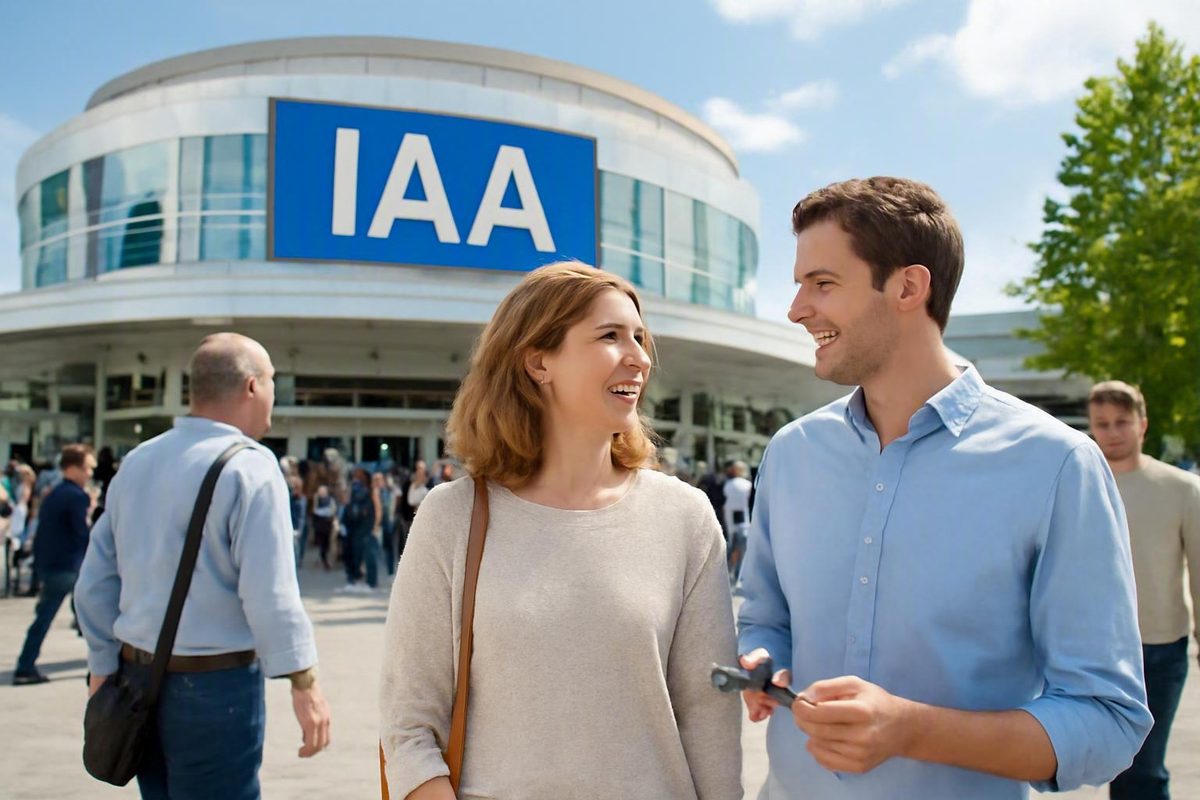
For generations of enthusiasts, “IAA” meant Frankfurt: vast exhibition halls, new-car premieres, supplier displays, concept vehicles, technical conferences, and crowds converging on Messe Frankfurt. That association remains strong enough that people still search for the IAA Frankfurt International Motor Show when researching Germany’s long-running passenger-vehicle exhibition.
Today, however, the name describes a historical chapter rather than a current Frankfurt event. The passenger-focused show held its final Frankfurt edition in 2019, moved to Munich in 2021, and adopted the broader IAA Mobility identity. Deutsche Welle identifies the Munich show as the rebranded successor to the former Frankfurt event and the VDA as its organizer. Its account also describes the event’s expanded mobility remit.
The IAA’s commercial-vehicle branch continues separately in Hanover as IAA Transportation. This guide explains how Frankfurt became the show’s long-term home, what visitors encountered there, how its mobility focus began evolving before the relocation, and where the next passenger-focused IAA will take place.
The short answer: the IAA is no longer held in Frankfurt
Current status: The final passenger-car IAA in Frankfurt took place in 2019. Its successor moved to Munich in 2021 and is now called IAA Mobility. IAA Mobility 2027 is a Munich event, not a Frankfurt event.
IAA abbreviates Internationale Automobil-Ausstellung, commonly translated as International Automobile Exhibition. The organizer is the Verband der Automobilindustrie, or VDA, Germany’s automotive-industry association.
The modern IAA operates through two related events:
- IAA Mobility covers passenger vehicles and broader forms of personal mobility in Munich.
- IAA Transportation focuses on commercial vehicles and transport in Hanover.
Searches for IAA Frankfurt, Frankfurt Motor Show, Frankfurt International Motor Show, or International Motor Show Germany generally refer to the historical passenger-car exhibition held at Messe Frankfurt. The Munich event is its successor, not an unrelated show that happens to use the same initials.
The relocation also involved more than a venue change. IAA Mobility places cars within a broader program that can include software, batteries, charging, autonomous systems, connected services, bicycles, scooters, public transport, and shared-mobility concepts.
For practical purposes:
- Research mentioning Messe Frankfurt usually concerns an edition from 2019 or earlier.
- Current passenger-mobility information should be sought under IAA Mobility Munich.
- Information about trucks, buses, trailers, logistics, and commercial transport belongs under IAA Transportation Hanover.
- Historical Frankfurt opening hours, ticket categories, addresses, and transit directions are not valid for a current IAA visit.
The next passenger-focused edition is officially scheduled for September 7–12, 2027, in Munich, with a separate press day on September 6. Because it is a future event, operating details remain subject to change. The official IAA Mobility website provides the current dates and location.
From eight vehicles in Berlin to a global show in Frankfurt
The IAA did not begin in Frankfurt. Its history starts in imperial-era Berlin, when the automobile was still a novelty rather than an established mass-market product.
A concise chronology shows how the event developed:
- 1897 — Berlin: The first IAA was held at Berlin’s Hotel Bristol, with eight motor vehicles displayed.
- 1951 — Frankfurt: The passenger-car exhibition moved to Frankfurt. The April fair reportedly attracted 570,000 visitors.
- 1989 — Final combined Frankfurt event: Passenger cars and commercial vehicles still appeared together. The event reportedly had almost 2,000 exhibitors and more than 1.2 million visitors.
- 1991 — Passenger-car cycle begins: Passenger vehicles continued in Frankfurt during odd-numbered years. The first edition under the separated cycle reportedly attracted more than 935,000 visitors.
- 1992 — Commercial-vehicle cycle begins: The commercial-vehicle IAA started operating in Hanover during even-numbered years.
- 2011 — Electric and digital themes gain dedicated space: Frankfurt introduced a Hall of Electric Mobility, an Electric Mobility Conference, and a CarIT Conference.
- 2015 — New Mobility World appears: The platform covered electric mobility, autonomous driving, connectivity, and urban mobility.
- 2019 — Frankfurt era ends: The passenger-focused IAA held its final Frankfurt edition.
- 2021 — Munich era begins: The passenger event moved to Munich and became IAA Mobility.
These dates and historical scale markers are compiled in an overview of the International Motor Show Germany. Because parts of that third-party history are lightly sourced, its early attendance figures are best understood as reported estimates rather than perfectly comparable audited totals.
Frankfurt became much more than a temporary host. The connection became so familiar that “Frankfurt Motor Show” functioned as a widely understood alternative name for the passenger-car IAA.
The split after the final combined show is central to understanding the IAA today. Passenger and commercial vehicles did not disappear and later return under unrelated brands. Instead, the exhibition divided into alternating events serving different markets.
From the early 1990s onward, Frankfurt hosted passenger vehicles in odd-numbered years, while Hanover hosted the commercial-vehicle exhibition in even-numbered years. The present-day alternation between IAA Mobility and IAA Transportation continues that basic structure.
Reported attendance also explains why Frankfurt remains so prominent in automotive memory. The first Frankfurt edition drew mass interest, while the last combined passenger-and-commercial event reached a still larger scale. The first passenger-only show under the separated cycle also attracted hundreds of thousands of visitors.
Those figures do not establish that the IAA was the “world’s largest” or “most comprehensive” motor show. Such rankings depend on the year, exhibition area, access rules, exhibitor categories, and whether totals include trade delegates, media, staff, or only public visitors. The figures are more useful as indicators of historical scale than as proof of an absolute global ranking.
For many visitors, the IAA was not simply an exhibition that happened to be held in Frankfurt. It was a recurring event through which successive generations encountered new production cars, concepts, safety systems, engines, accessories, components, and emerging technologies.
What visiting the Frankfurt motor show was actually like
There was no single timeless “Frankfurt Motor Show experience.” Hall layouts, exhibitors, attractions, access rules, and technology themes changed between editions. Two dated archival snapshots—2013 and 2017—show what the established format offered during its later years.
The 2013 Frankfurt edition
A third-party travel account scheduled the 2013 IAA for September 12–22, with daily opening hours of 9:00 a.m. to 7:00 p.m. at Messe Frankfurt. It also reported that more than 300 automotive-industry exhibitors would participate.
The listed exhibits went well beyond completed passenger cars:
- Cars
- Two- and three-wheeled special vehicles
- Parts and accessories
- Vehicle-care and maintenance products
- Model cars
- Professional automotive literature
- Protective clothing
Professional programming included the carIT Congress and Electric Mobility Congress. That industry layer was important: the IAA was not merely a public showroom where visitors could sit in new cars. It was also a meeting place for manufacturers, suppliers, engineers, technology businesses, trade media, and automotive organizations.
The same account listed public attractions including test rides, an SUV track, children’s cinema, vintage-car exhibitions, and electric-mobility displays. Visitors could therefore move among conventional manufacturer stands, technical exhibits, historical vehicles, family programming, and demonstrations.
These edition-specific details come from an archived 2013 travel-oriented account of the Frankfurt IAA. It was not an official event record, and its dates, hours, exhibitor estimate, address, and transport information apply only to the historical 2013 show.
That distinction matters because archival guides can still appear in search results without obvious context. A page may give a precise Messe Frankfurt address or detailed tram and S-Bahn directions while being entirely unsuitable for present-day trip planning.
Such logistical information can help reconstruct the historical visitor experience. It cannot tell a current traveler how to attend IAA Mobility in Munich.
The 2017 Frankfurt edition
The 2017 event offers another snapshot of the mature Frankfurt format. A period industry listing classified it as both a conference and an exhibition and dated it from September 14 through September 24.
Its categories illustrate the breadth of the show:
- Passenger cars and special vehicles
- Two- and three-wheeled vehicles
- E-mobility and car IT
- Parts and accessories
- Telematics
- Tuning
- Services
- Test drives
- Maintenance and repair products
- Specialist events and displays
The listing reported around 400 supply-industry exhibitors, emphasizing how much of the IAA existed beyond the headline car brands. WorldDAB’s 2017 event listing documents the dates and supplier-heavy exhibition range.
That breadth made the IAA relevant to several overlapping audiences. A public visitor might concentrate on production cars and concepts. An engineer could examine electronic systems, components, or telematics. Retailers could assess accessories and service products. Journalists divided their time among premieres, briefings, interviews, and technical presentations.
Suppliers used the same event to present systems that were often less visually dramatic than a concept car but potentially just as important to future vehicle production. Test drives and demonstration areas added an experiential layer to the otherwise static exhibition, although eligibility and availability varied by activity and edition.
The Frankfurt show combined several functions:
- Product theatre: New cars, concepts, and presentations generated public and media attention.
- Industry marketplace: Suppliers displayed components, materials, accessories, systems, and services.
- Technical forum: Conferences addressed topics such as information technology and electric mobility.
- Public attraction: Historical vehicles, specialist displays, family activities, and driving experiences broadened the program.
- Professional meeting place: Executives, engineers, suppliers, journalists, and other industry participants gathered in one venue.
This combination is central to Frankfurt’s legacy. The show was famous for vehicle premieres, but it was never merely a sequence of manufacturer stands. It also represented a large supporting industry and an increasingly visible technology program.
Archived Frankfurt guides should therefore be used to understand the past, not to arrange current travel. Old details concerning Ludwig-Erhard-Anlage, local rail directions, entrance gates, opening hours, parking, and ticket categories do not apply to IAA Mobility in Munich.
How Frankfurt anticipated the modern mobility show
It is tempting to summarize the history as a clean break: Frankfurt was about cars, while Munich is about mobility. That distinction is memorable but too simple.
The wider mobility concept had already begun to emerge during the Frankfurt era. As the chronology shows, the show created a dedicated Hall of Electric Mobility and accompanying electric-mobility and CarIT conferences before the move. New Mobility World later brought electric mobility, autonomous driving, connectivity, and urban mobility together under one platform.
These initiatives reflected a fundamental change in the automotive product. A car was becoming harder to present as an isolated mechanical object.
That evolution also widened the relevant exhibitor base. A conventional motor show naturally centered on vehicle manufacturers, design studios, component suppliers, tire companies, and accessory businesses. A broader mobility platform could also accommodate software developers, charging providers, battery companies, digital-service businesses, bicycle manufacturers, scooter makers, public-transport concepts, and shared-mobility services.
The Munich event reflects that enlarged field. Its program can encompass automakers and traditional suppliers alongside software, charging, autonomous systems, artificial intelligence, bicycles, scooters, public transport, and other mobility services.
There is continuity, but it should not be overstated. The presence of electric mobility and car IT in Frankfurt does not mean every part of the Munich concept had already been fully developed. Nor does it mean bicycles, scooters, public space, software, or shared transport had the same prominence they later acquired.
A more accurate interpretation is that Munich expanded and reorganized themes that had begun to surface in Frankfurt.
The difference is partly one of emphasis. In Frankfurt, electric and digital subjects could appear as specialist halls, congresses, or platforms inside a passenger-car exhibition. Under the IAA Mobility identity, the broader concept of mobility helps define the event itself.
The difference is also spatial. The Frankfurt experience was strongly associated with the trade-fair grounds. Munich has used both the exhibition complex and selected public locations in the city, creating a different relationship among the event, its host city, and non-trade visitors.
The rebrand therefore represented several connected changes:
- A move from Frankfurt to Munich
- A new public identity
- A broader range of exhibitors and subjects
- Greater emphasis on connected transport systems
- More visible use of public urban locations
- Continued use of motor-show elements such as premieres, presentations, conferences, exhibits, and test experiences
IAA Mobility is neither an unrelated replacement nor simply the old Frankfurt show with a new sign. It is the passenger-focused IAA reorganized around a wider definition of mobility.
The final Frankfurt years: attendance fell, but the story is not one-cause simple
Reported attendance declined substantially during the final three Frankfurt editions:
| Frankfurt edition | Reported attendance |
|---|---|
| 2015 | Approximately 931,700 |
| 2017 | Approximately 810,000 |
| 2019 | Approximately 560,000 |
The compiled attendance history reports a decline of roughly 371,700 visitors between 2015 and 2019, with the latter year marking the final passenger-car IAA in Frankfurt. The historical overview lists the three edition totals.
The downward trajectory appears still more pronounced against longer-term reporting. Deutsche Welle described the early-2000s Frankfurt show as having around 2,000 exhibitors and one million visitors. Those numbers do not provide a perfectly standardized baseline, but they convey the scale associated with the event before its final decline.
Attendance is evidence of change, not a complete explanation for relocation. A lower visitor total does not establish why manufacturers reduced their presence, how the organizer evaluated the old format, or why Munich ultimately became the new host.
Protests and criticism also formed part of the final Frankfurt environment. Its analysis presents these as interacting pressures rather than a documented single cause.
The following factors can therefore be discussed as context:
- Some manufacturers withdrew from traditional motor shows or reduced their exhibition presence.
- Automakers gained alternative ways to reveal products, including digital presentations and dedicated brand events.
- Electrification, software, new competitors, and changing transport expectations were disrupting the industry.
- Traditional shows faced questions about whether large static displays justified their expense.
- Environmental groups and other demonstrators challenged the event and the industry around it.
- The aftermath of the diesel-emissions scandal formed part of the wider reputational environment.
- Public debate increasingly extended beyond private passenger cars.
These factors may have reinforced one another. None should be elevated into a sole proven cause.
Protests, for example, were visibly part of the final Frankfurt period, but reported participation estimates differed. Presenting one disputed number as definitive would create false precision. More importantly, the presence of demonstrations does not prove that protests alone caused the move.
The same caution applies to manufacturer withdrawals. Reduced brand participation might make a show less attractive to visitors, while falling attendance might make manufacturers less willing to finance large stands. Both trends could also reflect broader changes in marketing and vehicle technology. The evidence does not isolate one direction of causation.
“Dieselgate caused the move” is similarly inadequate as a complete explanation. The scandal contributed to a difficult environment for German automakers, but the IAA’s electric and digital expansion had begun earlier. The Munich concept addressed much more than one reputational crisis.
Changing consumer behavior is plausible context, but it is broad. Some people may have preferred online launches or brand-specific events. Others may still have wanted a major physical exhibition but found fewer participating manufacturers. Without complete primary research into visitor decisions and organizer deliberations, those possibilities should not be presented as settled findings.
The most defensible conclusion is narrower:
- Attendance fell substantially during the final three Frankfurt editions.
- Manufacturer participation and the traditional show model were under pressure.
- The industry’s technological and public-policy environment was changing.
- Protests and criticism formed part of the final Frankfurt context.
- The VDA moved the passenger-focused event and introduced a broader Munich format.
- The available evidence does not establish the VDA’s complete city-selection criteria or prove one exclusive reason for leaving Frankfurt.
Venue changes can involve exhibition infrastructure, city partnerships, commercial considerations, public programming, and brand strategy. Without the organizer’s full evaluation record, the responsible account is a documented trend accompanied by attributed context—not a single-cause verdict.
IAA Frankfurt versus IAA Mobility and IAA Transportation
The historical Frankfurt show and the two current IAA events share a common lineage, but they are not interchangeable.
| Event | Location and timing | Primary emphasis and format |
|---|---|---|
| Historical IAA Frankfurt | Messe Frankfurt; passenger-car editions in odd-numbered years through 2019 | Passenger cars, suppliers, automotive technology, accessories, services, conferences, specialist exhibits, presentations, and test drives |
| IAA Mobility | Munich; odd-numbered years | Passenger and personal mobility, including cars, motorcycles, bicycles, micromobility, software, batteries, charging, autonomous driving, and connected services |
| IAA Transportation | Hanover; even-numbered years | Commercial vehicles and the wider commercial-transport sector |
Historical IAA Frankfurt
The Frankfurt event centered on passenger cars but was supported by a broad automotive supply chain. Manufacturer stands and vehicle premieres received much of the public attention, while components, accessories, maintenance products, telematics, car IT, tuning, services, conferences, and specialist displays completed the program.
Its physical identity was concentrated around Messe Frankfurt. An edition could occupy multiple halls and outdoor areas, but visitors still understood themselves to be attending a trade-fair-ground event in Frankfurt.
IAA Mobility in Munich
IAA Mobility retains cars and vehicle technology, but passenger mobility now provides the larger frame. Its scope can include motorcycles, bicycles, scooters, micromobility, software, batteries, charging infrastructure, automated-driving technology, and connected services.
Premieres, conference sessions, presentations, technical exhibits, and test experiences have not disappeared. They now sit beside subjects and exhibitors that would once have seemed peripheral to a conventional passenger-car show.
For the documented 2025 edition, the trade-focused IAA Summit used the Munich exhibition grounds, while the public IAA Open Space brought programming into central Munich. The U.S. Commercial Service’s event briefing documents that 2025 summit-and-city arrangement. Its page is titled for the 2027 event, so the description should be treated specifically as a record of the earlier format—not as confirmation that every access rule or zone will remain identical in 2027.
Trade credentials, public entry, tickets, and activity-specific requirements must be checked for the relevant edition.
IAA Transportation in Hanover
It is the relevant branch for readers interested in trucks, buses, commercially operated vans, trailers, logistics, and related technology.
Hanover’s role did not begin with the passenger event’s move to Munich. The separation between passenger and commercial exhibitions dates to the early 1990s. Munich replaced Frankfurt as the home of the passenger-focused IAA; it did not replace Hanover’s commercial specialization.
The alternating structure is straightforward:
- Odd-numbered years: IAA Mobility in Munich
- Even-numbered years: IAA Transportation in Hanover
Historical Frankfurt totals and modern Munich participation figures should not be compared without qualification. Older reports often use “visitors,” while newer accounts may refer to “participants” or “attendees” across trade and public zones. Media, exhibitors, staff, delegates, and public visitors may be counted differently.
The strongest continuity is therefore qualitative rather than numerical. Across the old and new formats, the IAA identity still includes vehicles, technology exhibits, business meetings, conference programming, presentations, and opportunities to experience products. What changed was the breadth of “mobility,” the balance between automotive and adjacent sectors, and the event’s relationship with its host city.
Where and when the next passenger-focused IAA takes place
IAA Mobility 2027 is scheduled for September 7–12, 2027, in Munich.
A separate press day is scheduled for September 6, 2027. These are official future-event details, but schedules and operating arrangements may still change.
The available information does not confirm:
- Ticket prices
- Daily opening and closing hours
- Which areas will be open to the public
- Which areas will require professional or media credentials
- Final venue-by-venue schedules
- Test-drive eligibility or reservation procedures
- A complete 2027 exhibitor list
- Final security, access, or participation rules
Prospective visitors should consult the official IAA Mobility site rather than extrapolating from an earlier edition. The site provides visitor and exhibitor information, press releases, conference material, participation opportunities, newsletters, podcasts, directories, and selected sessions available on demand.
Travel planning should begin only after identifying the part of the event you intend to visit. A trade summit, conference session, press activity, public display, or test experience may have different access conditions. Accommodation convenient for one zone may not be convenient for another, and an activity offered in a previous edition is not guaranteed for 2027.
Most importantly, disregard archived Frankfurt logistics, including:
- The Messe Frankfurt address at Ludwig-Erhard-Anlage
- Frankfurt tram or S-Bahn directions
- Opening hours listed for 2013 or 2017
- Old entrance and hall information
- Archived Frankfurt ticket categories
- Historical parking and road-access guidance
Use Frankfurt archives to understand what the show was. Use current official information to plan for Munich.
Frequently asked questions
What does IAA stand for?
IAA stands for Internationale Automobil-Ausstellung, commonly translated into English as International Automobile Exhibition. The abbreviation continues across the historical Frankfurt show and the current IAA Mobility and IAA Transportation events.
When was the last IAA Frankfurt International Motor Show?
The final passenger-car IAA held in Frankfurt took place in 2019. The successor moved to Munich in 2021 and adopted the name IAA Mobility, as documented in the historical accounts cited above.
References to a Frankfurt IAA after 2019 are therefore usually historical, mistaken, or concerned with a different event. They should not be treated as evidence that the passenger-focused IAA still operates at Messe Frankfurt.
Why did the IAA move from Frankfurt to Munich?
The final Frankfurt years were marked by declining reported attendance, reduced participation by some manufacturers, debate about traditional auto-show formats, technological disruption, and public protests.
These developments provide context, but the available evidence does not prove that any one factor caused the move by itself. It also does not reveal the VDA’s complete city-selection criteria. Claims that Munich was selected for one definitive reason should therefore be treated cautiously.
What is the difference between IAA Mobility and IAA Transportation?
IAA Mobility is the passenger and broader personal-mobility event held in Munich during odd-numbered years. Its scope includes cars, motorcycles, bicycles, micromobility, software, batteries, charging, autonomous-driving technology, and connected services.
IAA Transportation is held in Hanover during even-numbered years and specializes in commercial vehicles and commercial transport. The two events share the IAA lineage but serve different primary markets.
When and where is the next passenger-focused IAA?
IAA Mobility 2027 is scheduled for September 7–12, 2027, in Munich, with a separate press day on September 6. The U.S. Commercial Service event page also lists the September 2027 Munich edition.
Because the event is future-dated, visitors should verify tickets, schedules, venues, credentials, access rules, and exhibitor information before booking travel.
The Frankfurt motor show was a defining chapter in IAA history, but that chapter ended in 2019. Its passenger-focused successor is IAA Mobility in Munich, whose wider remit builds on electric-mobility and automotive-technology themes that had already begun emerging during the Frankfurt era. Archived Frankfurt material remains valuable history—not current travel guidance.